Toluene Diisocyanate (TDI) for Polyurethane Production
Toluene Diisocyanate (TDI) - Highly reactive chemical for polyurethane foam production, coatings, adhesives, and elastomers with comprehensive safety handling requirements.
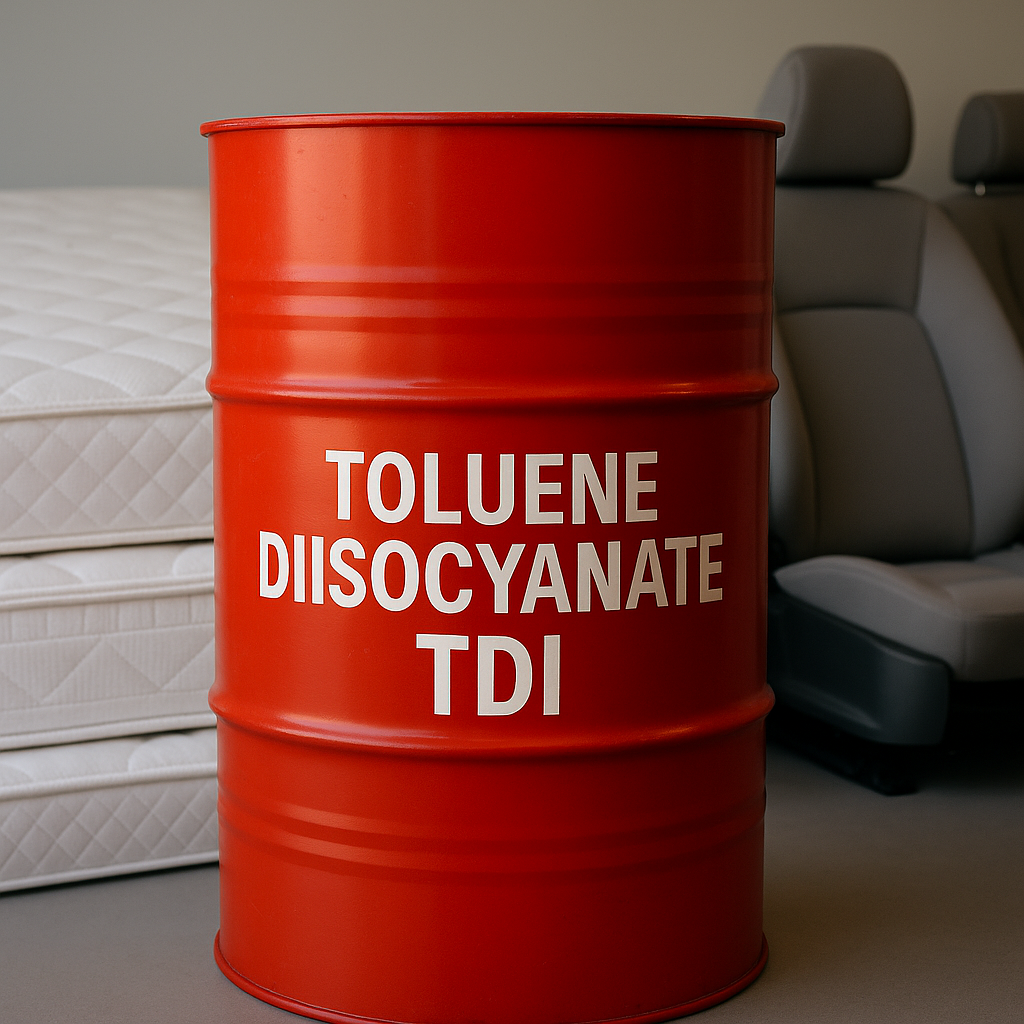
Additional Information
Toluene Diisocyanate (TDI) - Industrial Polyurethane Production
Toluene Diisocyanate (TDI) is a highly reactive chemical compound that serves as a fundamental building block in polyurethane chemistry. As one of the most widely used isocyanates in industrial production, TDI's exceptional reactivity with hydroxyl-containing compounds like polyols makes it indispensable for creating versatile polyurethane products across numerous applications.
Chemical Composition & Structure
Isomeric Mixture: TDI consists primarily of two isomers that differ in the positioning of isocyanate groups on the toluene ring structure.
2,4-Toluene Diisocyanate (2,4-TDI): Predominant isomer with asymmetric isocyanate group positioning
2,6-Toluene Diisocyanate (2,6-TDI): Secondary isomer with symmetric isocyanate group arrangement
Reactive Groups: Contains two highly reactive isocyanate (–NCO) groups that readily form urethane linkages with polyols
Physical Properties
- Appearance: Colorless to pale yellow liquid at room temperature
- Molecular Weight: Approximately 174.2 g/mol
- Boiling Point: ~250°C (482°F)
- Density: ~1.22 g/cm³ at 25°C
- Solubility: Insoluble in water, soluble in organic solvents (acetone, benzene, toluene)
- Vapor Pressure: Significant vapor pressure requiring careful handling
Primary Industrial Applications
🛏️ Polyurethane Foam Production
- Flexible Foams: Primary component for mattresses, furniture cushioning, automotive seating
- Rigid Foams: Insulation panels, refrigeration units, pipe insulation systems
- Custom Formulations: Tailored density and hardness for specific applications
🎨 Coatings & Adhesives
- Industrial Coatings: Durable protective finishes with chemical resistance
- Automotive Paints: High-performance surface coatings
- Construction Adhesives: Strong bonding agents for building materials
- Sealants: Flexible joint and gap sealing compounds
⚙️ Elastomers & Specialized Products
- Polyurethane Elastomers: Gaskets, seals, flexible automotive components
- Industrial Binders: Fiber, rubber, and textile binding applications
- Synthetic Leather: Automotive upholstery, footwear, furniture coverings
- Technical Parts: High-performance mechanical components
Critical Safety Information
⚠️ Health Hazards & Exposure Risks
- Inhalation Hazard: Vapors can cause respiratory irritation, coughing, asthma, and long-term pulmonary issues
- Skin Contact: May cause irritation, chemical burns, or allergic dermatitis
- Eye Exposure: Can result in severe irritation, redness, and potential permanent damage
- Sensitization Risk: Repeated exposure may cause allergic sensitization
🛡️ Mandatory Safety Precautions
- Personal Protective Equipment: Chemical-resistant gloves, safety goggles, respiratory protection
- Ventilation Requirements: Work in well-ventilated areas or use fume hoods
- Storage Conditions: Tightly sealed containers, moisture-free environment
- Spill Management: Immediate containment and proper cleanup procedures
🚨 Emergency Procedures
- Skin Contact: Immediately flush with plenty of water for 15 minutes
- Eye Exposure: Rinse continuously with water, seek medical attention
- Inhalation: Move to fresh air, provide respiratory support if needed
- Medical Attention: Seek immediate professional medical care for significant exposure
Technical Specifications
- Purity Grade: Industrial grade with specified isomer ratios
- Reactivity: High reactivity with hydroxyl, amine, and water molecules
- Storage Stability: Requires protection from moisture and atmospheric humidity
- Compatibility: Compatible with various polyols and chain extenders
- Handling Temperature: Standard handling at room temperature with controlled conditions
Quality Assurance
- Batch Consistency: Rigorous quality control for consistent performance
- Specification Compliance: Meets international chemical standards
- Technical Documentation: Comprehensive SDS and technical data sheets
- Traceability: Complete batch tracking and documentation
TDI remains a cornerstone chemical in polyurethane manufacturing, enabling the production of diverse materials from comfortable bedding to industrial coatings. While offering exceptional performance characteristics, TDI requires strict adherence to safety protocols and handling procedures to ensure safe industrial use. Our technical support team provides comprehensive guidance for proper storage, handling, and application of TDI in your manufacturing processes.
Request more information
Tell us what you need and we'll get back to you.